KEY SCRIPTURE:1Ti 1:1 KJV” Paul, an apostle of Jesus Christ by the commandment of God our Saviour, and Lord Jesus Christ, which is our hope;”
In our next series of studies, we will be studying various books of the bible. The import of this is to help the child of God appreciate the truths of scripture in a very simplified way, so he or she can easily apply it to his or her life, as well as being able to teach others.
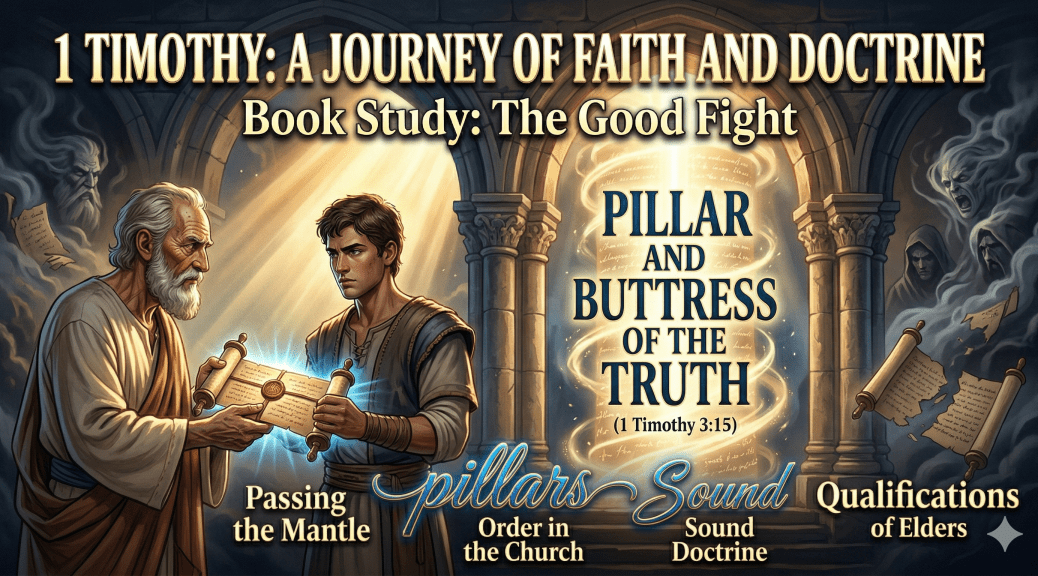
Timothy was the son of Apostle Paul in the Lord. 1 Timothy 1:2 KJV” Unto Timothy, my own son in the faith: Grace, mercy, and peace, from God our Father and Jesus Christ our Lord.”Timothy was the pastor of the church of Ephesians. As a young minister, he faced a lot of challenges, pressures, and conflicts from the church and its surrounding culture. To counsel and help him out of the difficulties he found himself in, Apostle Paul sent this personal letter.
History tells us this letter was written in 64 AD, probably just before his final imprisonment in Rome. We learnt from Acts chapters 25 and 26 that Paul appealed to be tried before Caesar during his trial in Jerusalem. He was sent to Rome as a prisoner. Most scholars believe that Paul was released about AD 62( possibly because the statute of limitations had expired) and that during the next few years, he was able to travel. During this time, he wrote 1 Timothy and Titus. Soon, however, Emperor Nero began his campaign against the church. It is believed that during this time, Paul was imprisoned again and eventually executed.
As his characteristic style is, he begins his letter to Timothy by stating that his apostleship is by God’s command. In verse 2, he established his relationship with Timothy. From here, he begins his fatherly advice, warning Timothy of false teachers( 1 Tim 1:3-11). He then urges him to hold on to his faith in Christ ( 1:12-20). He then moves on to talk about public worship and emphasises the importance of prayer( 2:1-7). He talked about order in the church meetings( 2:8-15).In chapter 3:1-16, he majored on the qualifications of a minister or a pastor. This led to the qualifications of other church leaders, elders, and deacons.
In chapter 4:1-16, he speaks again about false teachers, telling Timothy about how to recognise them and respond to them. In the next chapter, he gives practical advice on pastoral care to the young and old. ( 5:1,2), widows ( 5:3-16), elders ( 5:17-25), slaves ( 6:1-2). Apostle Paul concludes by exhorting Timothy to guard his motives ( 6:3-10), to stand firm in his faith ( 6:11-12), to live above reproach ( 6:13-16), and to minister faithfully (6:17-21)
In all these, we learn that every Christian must pass on the truths of scripture to a protege or a growing Christian, by systematically teaching him or her to know the general counsel of scripture as well as how to apply it to his day-to-day experience.
THOUGHT: TEACH THE YOUNG AND BE READY TO BE TAUGHT.
FURTHER STUDIES
Joh 21:15 KJV” So when they had dined, Jesus saith to Simon Peter, Simon, son of Jonas, lovest thou me more than these? He saith unto him, Yea, Lord; thou knowest that I love thee. He saith unto him, Feed my lambs.”
Mat 11:29 KJV” Take my yoke upon you, and learn of me; for I am meek and lowly in heart: and ye shall find rest unto your souls.”
 SAMUEL SOMUAH ASANTE